Product Boundaries and Limitations of Claude Code: A Source Code Perspective
8/2/2026, 7:17:05 PM · updated 8/2/2026, 7:18:21 PM · Source
AI-translated on 8/2/2026, 7:20:06 PM · by Qwen3.6 35B (fast, default)
Analyzing Claude Code from a source-code perspective reveals that its core competitiveness lies in closed-loop engineering capabilities and platform-level strengths, yet it also faces practical limitations such as heavy reliance on tool context, high system complexity, and a substantial security-governance burden.
Studying the Source Code Isn't Just for Awe—Also Look at Its Boundaries
Claude Code is incredibly capable, but studying a system by focusing only on what it "has accomplished" easily leads to a skewed perception.
A more valuable approach is to examine the following concurrently:
- Why it's strong
- Why it's so complex
- What its boundaries and trade-offs are
Boundary #1: It Still Heavily Relies on Tools and Context
Looking at the source code, you can see that much of Claude Code's capability comes from:
- The tooling system
- Context injection
- Permission and state management
- MCP / LSP / Plugin extensions
This means its power isn't derived from the model operating alone.
Conversely, if these supporting capabilities are absent, its performance will also drop significantly.
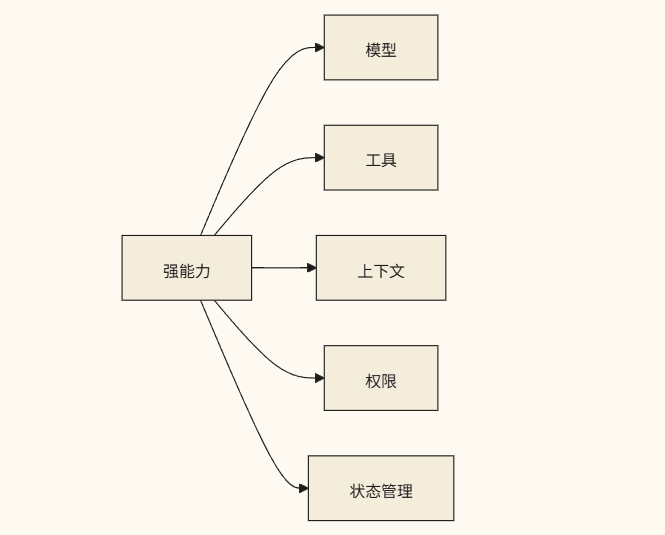 In other words, it's not something you can just "replicate by swapping out the model."
Boundary #2: Extremely High Complexity
Just by looking at a few core files, you can feel it:
main.tsxis extremely heavycommands.tsis exceptionally longAppStateis highly complex- Bash / permissions / remote capabilities are all packed with extensive details
This shows that one of the costs of Claude Code is its very high system complexity.
Problems brought by high complexity include:
- High maintenance costs
- Heavy cognitive load
- Functions are more prone to interfere with each other
Boundary #3: Security Isn't an Option—It's a Continuous Burden
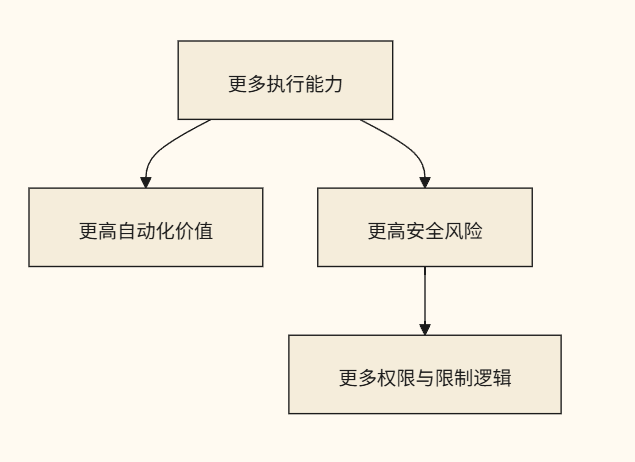
The more capable the tool, the more it requires robust permission governance.
This is particularly evident in Claude Code, as it has to handle:
- File modifications
- Shell execution
- Remote access
- Multi-agent tasks
In other words, a long-term cost of Claude Code is the necessity to constantly maintain security boundaries.
Boundary #4: Not Every Problem Deserves to Be Handed to It
From an architectural perspective, Claude Code is well-suited for:
- Engineering task breakdown
- Cross-file comprehension and modification
- Continuously pushing work forward within a project context
Yet it may not be the best fit for:
- Extremely simple one-off Q&A
- Pure discussion with absolutely no executable environment
- Open-ended exploration lacking clear boundaries
In other words, Claude Code excels at "engineering closed-loops" but doesn't necessarily excel in all interaction formats.
Boundary #5: Product Capabilities Are Deeply Bound to Organizational Capability
The presence of capabilities like these shows that Claude Code isn't a lightweight product:
- Remote Session
- MCP
- LSP
- Plugins
- Skills
- Plan Mode
- Multi-Agent
This means it's not merely a technical product; it more closely resembles a platform designed for long-term evolution.
The upside of a platform is its high ceiling, but the downside is that both decision-making and maintenance become heavier burdens.
This Is Also Why It's Hard to "Quickly Replicate"
Many people see Claude Code and think, "It's nothing more than model + tools."
But looking at the source code, this judgment clearly underestimates it.
What's truly difficult isn't plugging in tools, but stabilizing all of the following simultaneously:
- Unifying tool protocols
- Context governance
- Permission systems
- State management
- Remote and task capabilities
- UI and approval workflows
Summary
From the perspective of the source code, the product boundaries of Claude Code can be summarized in one sentence:
It excels in engineering closed-loops and platform capabilities, but at the cost of very high system complexity, security governance burden, and runtime assembly costs.
This is another side you must keep in mind when trying to understand it.
Learning map
Learning Map: Exploring Claude Code's Product Boundaries from the Source Code
Stage 1: Understanding the Core Architecture (Foundation)
- Tool & State Management: Master how
AppStatemanages session context and permissions. - Protocol Support: Understand LSP, MCP (Model Context Protocol), and Plugin system-level integration mechanisms.
Stage 2: Diving into System Complexity (Advanced)
- Command Processing Flow: Analyze command handling for complex engineering instruction sequences in
commands.ts. - State Transitions: Learn how
main.tsxhandles challenging UI rendering and asynchronous control.
Stage 3: Evaluating Boundaries & Cost (Expert)
- Security Governance System: Study interception mechanisms for file modifications, Shell execution, and remote sessions. Platform capability analysis: Identify which capabilities must bind to organizational capacity (e.g., Multi-Agent orchestration) rather than just a model swap—Summary & Application: Compare closed-loop engineering tasks with traditional Q&A scenarios, clarifying Claude Code's absolute advantage boundaries and applicable domains in automated development.
Get hands-on — step by step
-
Setting Up Installation and Debugging Environment: Upgrade the locally installed Claude Code (VS Code / Cursor) plugin to the latest version, and open an engineering repository containing substantial code logic as a test base.
-
Observing Complex Instruction Execution Flow: For core tasks requiring cross-file modifications, input clear task-decomposition instructions into Claude Code. Use DevTools or relevant logging interfaces to monitor the frequency of tool calls issued at the underlying level and context loading behavior.
-
Security Boundary Testing and Stress Testing: Intentionally attempt sensitive operations beyond permitted authority (such as executing risky shell commands). Observe its blocking feedback and human confirmation mechanisms, quantifying the rigor of its governance.
-
Analyzing Architectural Limitations: While collaborating with Claude Code toward project objectives, record scenarios where system performance stutters or context overflows (losing important background information) to clarify its physical and logical boundaries in resource management.
-
Assessing Product Fit: Compare
Top 3 sources
Links are AI-suggested — worth a quick sanity check before diving in.