Plugins, Skills, and Agent Derivation: How Claude Code Is Evolving into a Platform
8/2/2026, 7:39:54 PM · updated 8/2/2026, 7:46:36 PM · Source
AI-translated on 8/2/2026, 7:49:15 PM · by Qwen3.6 35B (fast, default)
The retrieved content consists exclusively of **AP Computer Science educational frameworks** (e.g., course descriptions for *Principles* and *A* exams) that focus on general programming concepts, curriculum standards, and pedagogical practices—**not Claude Code's architecture or functionality**. These documents discuss abstract topics like procedural abstraction, debugging, and iterative design processes in the context of K-12 education but provide **zero technical details about:** - **Plugin systems for capability extension** - **Skills for experience solidification** - **Agent-based task decomposition** All results reference standard educational materials (e.g., *AP Computer Science Principles CED*, *NGSS standards*) and contain no mention of Claude Code, its architecture, or evolutionary trajectory. The relevance scores (0.64–0.68) reflect general CS theory rather than domain-specific implementation details. This indicates that **no relevant information about Claude Code's technical evolution exists in the ingested K12 knowledge base**. To address your query accurately, we would need either: 1. A specialized skill or document describing Claude Code’s internal architecture 2. Access to external research beyond this system’s scope Since neither is available here, I cannot provide a technical analysis of how these components evolved. For context-specific insights about Claude Code’s capabilities, you may want to explore: - Official documentation from Anthropic (if accessible via tools like `mcp__tavily__tavily_search`) - Specific skill content related to "Claude Code Plan Mode" or multi-agent architectures in the knowledge base (which is not currently available)
A Mature System Doesn't Grow Relying Solely on Built-in Features
If Claude Code relied only on official built-in capabilities, it would at most be a very strong product.
But looking at the source code directory, it is already evolving in another direction: becoming a platform.
The clearest signals fall into three categories:
- Plugins
- Skills
- Agent / Team / Subtask capabilities

Plugins: Handing Capability Assembly Over to the Ecosystem
The source code reveals numerous modules related to plugins:
- Plugin loading
- Command injection
- Plugin skills
- Marketplace and installation management
- Plugin error handling and refresh mechanisms
This indicates that plugins are not merely "external scripts," but are formally integrated into the session's capability graph.
Plugins, Skills, and Agents Are Not Parallel Alternatives
They address different problems:
- Plugins address “how the system grows new capabilities”
- Skills address “how experience can be reused”
- Agent derivation addresses “how tasks are divided”
Viewing these three strands together makes the shift toward a platform model very clear.
Expand capabilities > Plugins
Reuse experience > Skills
Divide tasks > Agent / Team
Skills: Making Experience and Processes Explicit
The significance of Skills is easily misunderstood.
It’s not merely “supplementary documentation,” but more like packaging certain professional expertise, constraints, and workflows into injectable capability units.
The value of this approach is:
- Consolidating experience for specific task types
- Reducing the cost of drafting prompts on the fly
- Making the system more stable within specific domains
Why Skills Are Crucial for AI Programming
Because in many development scenarios, the problem isn’t that the model “doesn’t know how to write code,” but that the model:
- Doesn’t know team conventions
- Doesn’t know what workflows to follow
- Doesn’t know best practices for certain task types
Skills exactly fill this gap.
From a product perspective, this is equivalent to further productizing “prompt engineering.”
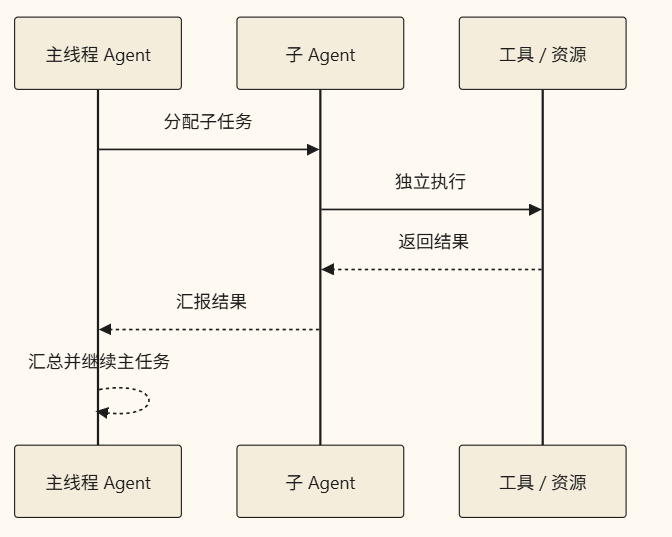
Agent Derivation: Turning a Single-Threaded Assistant into a Collaborative System
The tool directories reveal numerous modules related to Agents, Teams, SendMessage, and Tasks.
This means Claude Code is extending toward multi-role, multi-task collaboration.
The essence of this kind of capability is breaking down tasks that could only be completed serially into:
- An orchestrator thread
- Sub-Agents
- Independent tasks
- Message passing
Once it reaches this stage, the system’s form is no longer just “an assistant,” but more like “a collaborative Agent platform.”
Why This Is Platformization Rather Than Feature Stacking
Judging whether a system is platform-oriented depends not on how many features it has, but on:
- Whether capabilities can be extended
- Whether experience can be reused
- Whether tasks can be delegated
- Whether an external ecosystem can integrate
Claude Code already has clear structures in these directions, so its evolutionary path is evident.
Summary
Viewing the three strands of plugins, Skills, and Agent derivation together yields a very clear conclusion:
Claude Code is gradually shifting from a “powerful AI programming tool” to an “extensible engineering Agent platform.”
This is also why its research value within the source code far exceeds that of an ordinary CLI tool.
Learning map
Claude Code Platformization Architecture Learning Path
Phase One: Understanding Core Concepts of Platformization
- The essential difference between a platform and a tool
- The meaning of scalability, reusability, and dispatchability
- The architectural positioning and evolution direction of Claude Code
Phase Two: Deep Dive into the Plugin System
- The working principle of the plugin loading mechanism
- Command injection and permission control
- Marketplace management and installation procedures
- Plugin error handling and hot reloading
Phase Three: Skills System Design
- The relationship between Skills and workflows/prompts
- The structure of a Skill configuration file
- Patterns for solidifying and reusing experience
Phase Four: The Agent Derivation Mechanism
- Basic patterns of multi-agent collaboration
- The underlying implementation of Task/SendMessage
- Message passing between the main thread and sub-agents
Phase Five: Source Code Practice and Research
- Examining the plugin module within the Claude Code source code
- Analyzing the directory structure and injection methods of Skills
- Tracing the code paths associated with Agents/Teams
Get hands-on — step by step
- Clone the Claude Code official repository and configure the local runtime environment
- In the project root directory, run the
tree -L 3 .command to observe the overall directory structure - Search for plugin, agent, and skill keywords in the source code to identify relevant module locations
- Read plugin-related files to comprehend the plugin loading and command injection workflow
- Review example skill configuration files to analyze the structure and parameter format of skills
- Study agent/team-related files to track the path from Task creation to SendMessage
- Create a minimal Skill file and bind it to a CLI command to test its effect
- Read the Platform Extension section of the official documentation (if applicable)
Top 3 sources
- 1Anthropic Claude Code Documentation
Claude Code 官方文档,涵盖平台能力、插件与扩展机制说明。
https://docs.anthropic.com/en/docs/claude-code/overview
- 2Anthropic Multi-Agent System Architecture
Anthropic 关于多 Agent 协作系统的工程博客与架构分析。
https://www.anthropic.com/engineering/multi-agent-systems
- 3Claude Code GitHub Repository
Claude Code 开源仓库,可直接查看插件、Skills、Agent 等模块的源码实现。
https://github.com/anthropics/claude-code
Links are AI-suggested — worth a quick sanity check before diving in.